
What is in a
"Clarity Scan"?
79% of customers do online research before making purchase decisions. Missing or partial information about your business leads to confusion and lost buyers. We can help you enhance your online presence and resolve the errors mentioned in the report in the following topic areas:
Claim A Free Marketing Audit Of Your Business
We'll show you exactly where you're falling short when
it comes to your Online Marketing.
For no cost, you'll receive:
Your Online Marketing Audit
A checklist of the exact items you need to fix
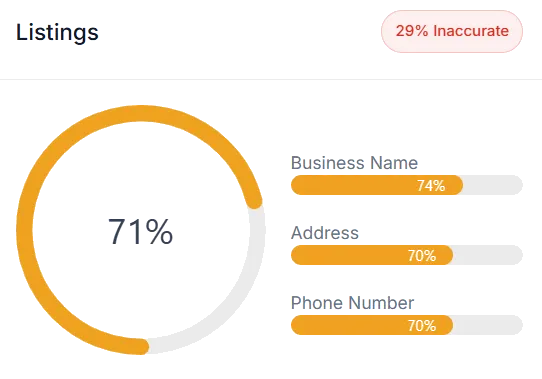
Listings
To be #1 on Google and other search engines you need to be saying the same thing, and all of the things on all places you provide information. Not only that you need to provide your infomation with as many sources of inforation as possible. That is why listing your business is important and enables you to drive your company to #1 on listings.
We'll show you exactly where you're falling short when
it comes to your Online Marketing.
For no cost, you'll receive:
Why it matters: Consistent NAP (Name, Address, Phone) across every directory not only boosts your local SEO authority but also eliminates buyer friction from conflicting information.
Listing
Listings help with Google by improving your visibility in search results and maps, making it easier for customers to find and contact your business.
Customers are more likely to trust a business with a complete, accurate, and up-to-date business information. A few incorrect listings may hurt your business in the long-run.
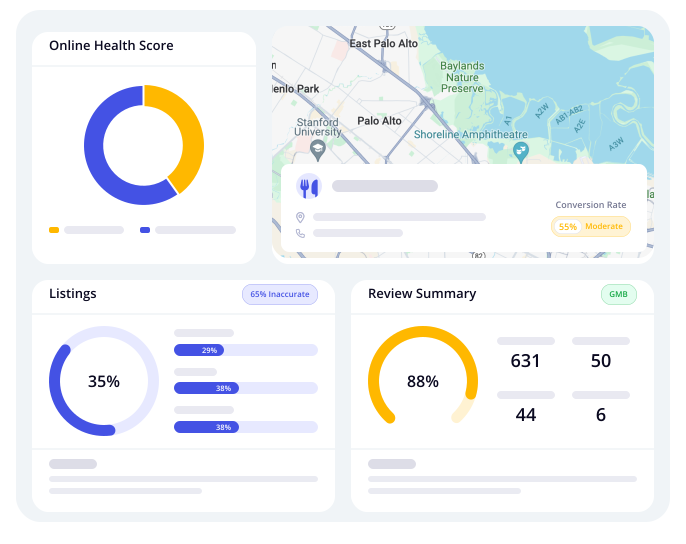
This metric shows your over all performance against what is possible across all of your listings.
FAQ's
Are all your business listings consistent across major platforms (Name, Address, Phone - NAP)?
Search engines verify your business credibility by cross-checking your information across platforms. Even small inconsistencies (e.g., "St." vs. "Street") can cause confusion and lower your local search rankings. Use a listing management tool like BrightLocal, Yext, or Moz Local, and manually check key directories (Google, Facebook, Yelp, Apple Maps, Bing) to ensure uniformity. This strengthens search engine confidence, improves local SEO, and boosts your business's online visibility.
Is your Google Business Profile (GBP) fully completed and verified?
Your Google Business Profile is key to online visibility. An incomplete or unverified profile won’t appear in Google Maps or local search results, limiting your reach. Log in to Google Business Profile Manager, fill out all sections (description, services, hours, messaging), upload updated photos, and ensure verification via mail, phone, or video. A complete GBP boosts local search rankings, increases customer engagement, and drives more calls, directions, and website visits.
Are there duplicate or incorrect listings that need to be removed?
Are there duplicate or incorrect listings that need to be removed? Duplicate listings can harm SEO, confuse customers, and lead to outdated information being displayed. Search your business name + city on Google, Yelp, and Bing, and use tools like Whitespark to identify duplicates. Claim and delete or merge duplicate entries to ensure accuracy. This strengthens your online authority, improves search rankings, and reduces lost leads from misdirected clicks.
Are you using the correct business categories across all listings?
Strong visuals make your business more appealing and increase user engagement. Google favors listings with fresh, high-quality images. Upload clear photos of your exterior, interior, staff, and services/products. Replace outdated or blurry images and add new ones monthly to show activity. This boosts clicks, builds trust, and strengthens customer connections—ultimately driving more conversions.
Are customer reviews visible and regularly updated on key listings?
Your business categories determine when and where your listing appears in search results. Missing or incorrect categories can limit visibility. Review Google’s category list, update primary and secondary categories for accuracy, and ensure consistency across all platforms. This expands your reach, improves keyword relevance, and attracts more ideal customers—without additional ad spend.4o
Are you using UTM tracking links in your listings to monitor performance?
UTM tracking helps identify which listings drive the most traffic and conversions. Add UTM parameters to your website links, track performance in Google Analytics, and compare engagement across platforms. This allows for data-driven decisions, optimizing marketing efforts for better ROI.4o
Are your listings optimized for voice search and mobile users?
Voice searches like “Hey Siri, find a plumber near me” are increasing, and mobile-first indexing means accuracy matters. Use conversational keywords, ensure your website is mobile-friendly, and implement structured data for NAP and reviews. This improves visibility for high-intent users and gives you a competitive edge in voice search.
Are your services, products, and attributes listed in detail?
Are your services, products, and attributes listed in detail? Expanded Explanation: Many platforms now allow detailed entries, including menus, services, amenities, offers, and more. These details improve how you're shown in filtered search results (e.g., “wheelchair accessible,” “offers takeout”). Leaving them blank limits your exposure. Action Items: Add your products, services, and offers into Google Business Profile and Yelp. Use custom attributes where allowed (e.g., “women-led,” “free Wi-Fi,” etc.). Keep information up-to-date during seasonal changes. Benefits: More complete listings improve both visibility and conversion. Advantages: Your listing becomes a one-stop source for buyers researching before they call or visit.
Do you monitor and update your listings regularly?
Business information can change — holidays, new services, hours, promotions — and if your listings aren’t updated, customers may lose trust. Stale data leads to missed leads, bad reviews, or lower ranking. Action Items: Set a monthly or quarterly reminder to review and refresh listings. Assign someone on your team or use automation tools to monitor changes. Look for sudden drops in views or reviews as indicators. Benefits: Keeps your public-facing information accurate and relevant. Advantages: Protects your reputation and ensures customers always find up-to-date details.
Online Health Score
An online health score helps with Google by identifying issues that affect your visibility, SEO, and performance, so you can improve rankings and attract more traffic.
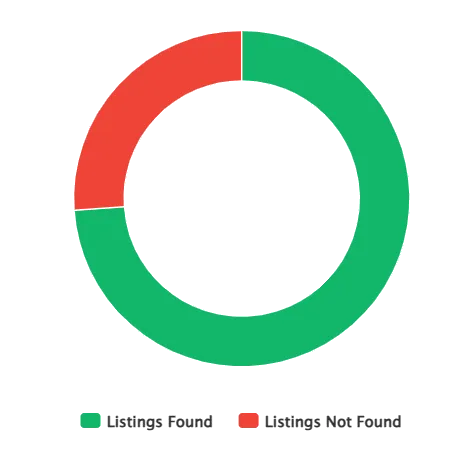
This metric shows how many within the measureable group of listings that were and were not found. The information comes from the Overall Listing Status outlined below.
FAQ's
What is my overall Online Health Score, and what does it mean?
Your Online Health Score measures your business’s digital marketing strength across SEO, listings, reviews, social media, and website performance. It gives you a clear picture of how well you're doing online and sets a baseline for improvement. A strong score means better visibility and credibility, while a lower score highlights areas that need attention. Understanding your score helps you focus on what matters most and use your resources efficiently to improve your online presence.
Which category (SEO, Listings, Reviews, Social, Website, Ads) is contributing most to my low score?
Your lowest-performing category is the biggest factor dragging down your Online Health Score. Identifying this weak spot helps you focus on what needs improvement instead of spending time on areas that are already strong. By addressing the issue—whether it's SEO, listings, reviews, social media, website performance, or ads—you can take targeted action, assign tasks, or bring in experts. This is the fastest way to boost your overall score and strengthen your online presence.
What is my website’s performance score, and how does it affect conversions?
Your website’s performance score reflects its speed, mobile optimization, and security—key factors that impact user experience and search rankings. A slow or unoptimized site can drive visitors away, lowering conversions. Improving page speed, mobile responsiveness, and security (like SSL) enhances user experience, reduces bounce rates, and increases the chances of turning visitors into paying customers.
How well is my business performing in local SEO search results?
Your review profile plays a key role in buyer trust. Too few or negative reviews can hurt conversions, while a strong, positive review presence builds credibility. Actively responding to feedback and encouraging more reviews strengthens social proof, making potential customers more likely to choose you. A well-managed review profile boosts trust and increases conversion rates.
What does my review profile look like, and how is it impacting buyer trust?
Your review profile plays a key role in buyer trust. Too few or negative reviews can hurt conversions, while a strong, positive review presence builds credibility. Actively responding to feedback and encouraging more reviews strengthens social proof, making potential customers more likely to choose you. A well-managed review profile boosts trust and increases conversion rates.
How active and consistent is my business on social media?
Your social media activity and consistency impact engagement and brand reputation. Regular, relevant posts keep your audience interested and build trust. If your presence is inconsistent, creating a content calendar and automating posts can help. An active social media strategy strengthens your community, boosts brand awareness, and makes your business more memorable to potential customers.4o
Are my paid ads and retargeting efforts aligned with my online presence?
Your paid ads and retargeting efforts need to align with your online presence to maximize conversions. If your landing pages, reviews, or brand reputation don’t support your ads, you may be wasting money. Ensuring consistent messaging and optimizing landing pages based on performance data improves ROI, helping you generate more leads while spending less—especially with retargeting.
Is my business website being found by search engines effectively (SEO score)?
Your SEO score determines how easily search engines find and rank your website. If your site isn’t indexed or optimized, it’s nearly invisible online. Auditing keywords, metadata, and content while improving on-page SEO and blogging can boost rankings. Strong SEO drives long-term traffic growth, helping you attract visitors without relying on paid ads.4o
What is my Online Reputation Score, and how can I improve it?
Your Online Reputation Score reflects your reviews, ratings, and brand mentions across the internet. A strong reputation can enhance your brand's credibility and perception, while a poor one can deter potential customers. To improve it, implement a proactive review request system and monitor brand mentions using reputation tools. A positive online reputation attracts high-intent buyers and helps you stand out from competitors.
Overall Listing Status
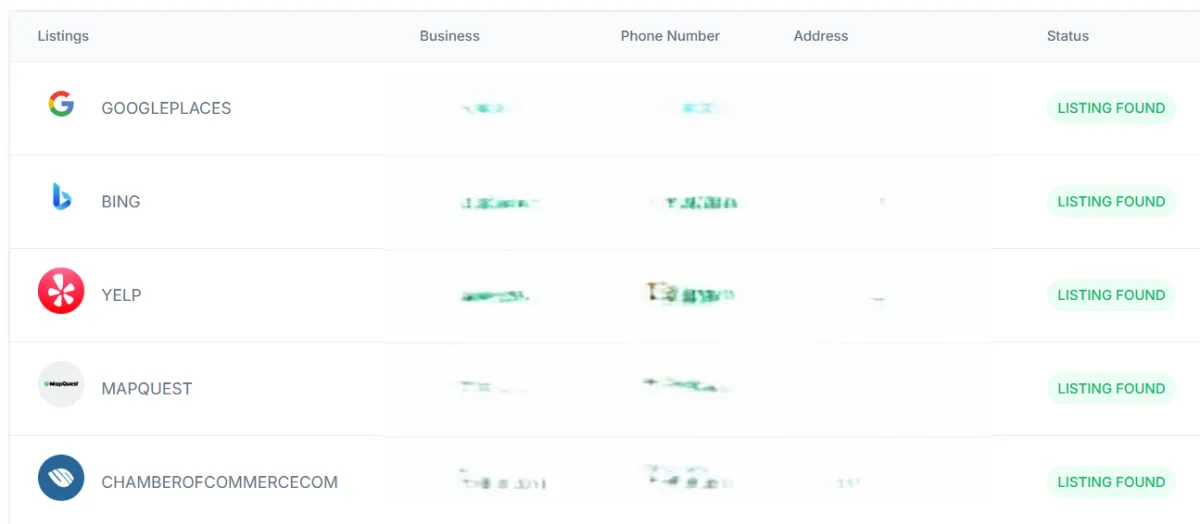
This matrix lists the details on the measureable listings and provides the posted details for each.
FAQ's
How accurate and consistent are my business listings across platforms?
Accurate and consistent business listings are crucial for local SEO and customer trust. If your name, address, or phone number varies across platforms, it can confuse customers and hurt your search rankings. Regularly monitoring and correcting discrepancies with listing management tools ensures better visibility, stronger credibility, and more engagement—leading to increased calls, website visits, and foot traffic from local searches.
How many business listing providers are there?
There are upwards of 70+ providers, however we report on the ones that can be digitally accessed and reviewed (measurable) in our report.
Who are the measurable listing providers?
GooglePlaces
Bing
Yelp
MapQuest
ChamberOfCommerce.com
MerchantCircle
Facebook Graph
ShowMeLocal
iGlobal
CitySearch
Yasabe
Tellows
EZLocal & ELocal
Hotfrog
iBegin
FindOpen
PropertyCapsule
TopRatedLocal
GoLocal247
YellowPageCity.com
MyLocalServices
InsiderPages
What details do you provide on the Overall Listing Status Matrix?
Listing Name
Business Name
Business Phone Number
Business Address
Scan Result Status
What if I am not listed with some of these listing providers?
You can:
1) Add them individually to the ~20 listed (and others).
2) Get a service (which we offer) that can do the listing updates for you quickly and easily to all 70+ listing providers. This is an ongoing automated monthly service.
What should I do if I find discrepancies?
You should ulitimately decide what will be the exact way you wish to present your business to the digital world. From that point, everything should match.
You can:
1) Change them individually to the ~20 listed (and others).
2) Get a service (which we offer) that can do the listing updates for you quickly and easily to all 70+ listing providers. This is an ongoing automated monthly service.
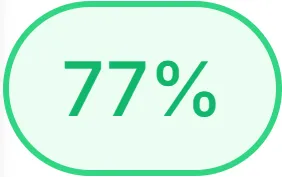
Overall Score for "Your Business Name"
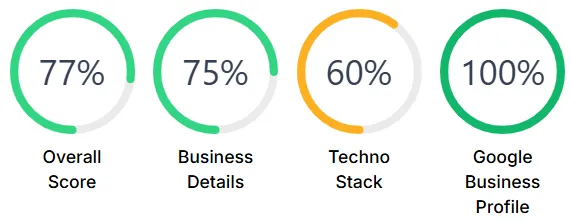
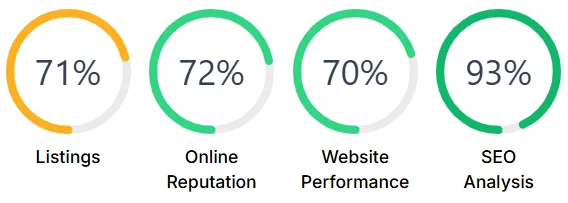
Individual Scores for "Your Business Name"
© 2026 Bizhackz Strategies - All Rights Reserved.


